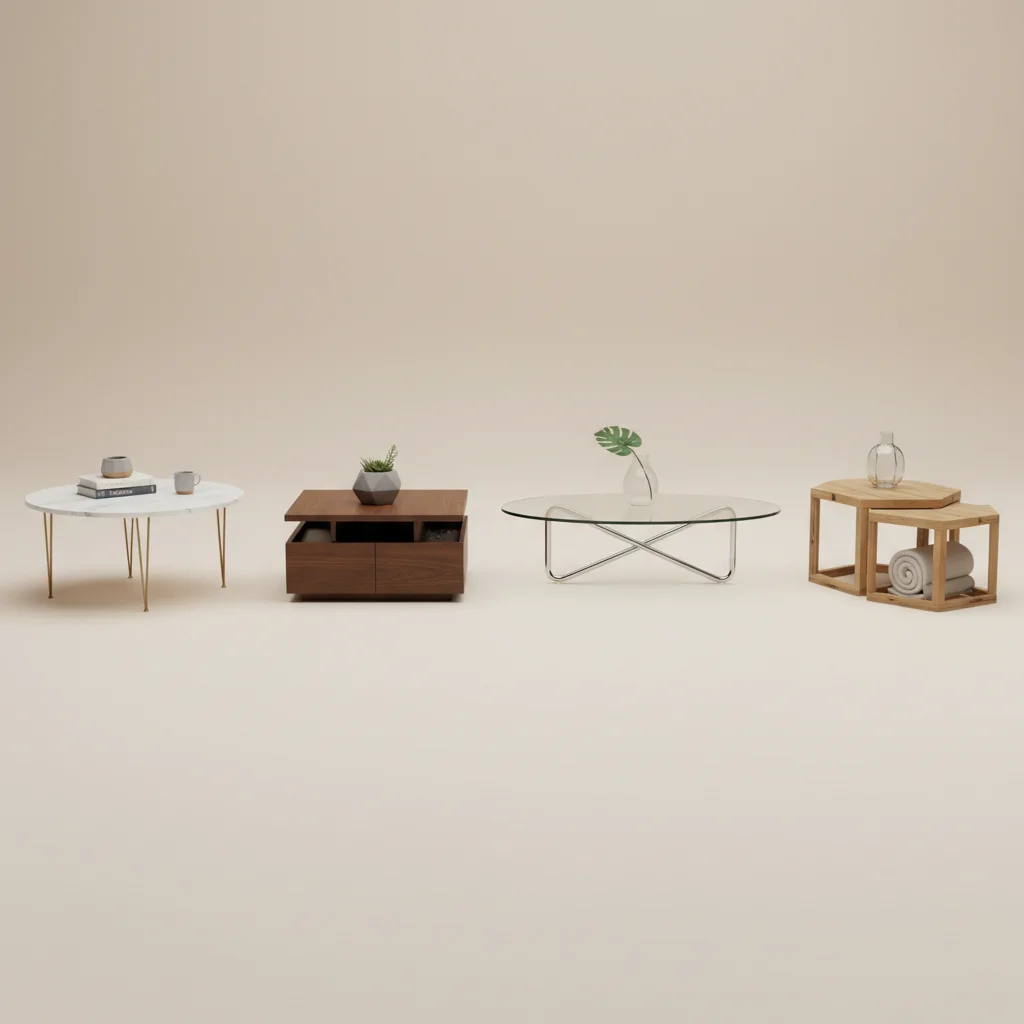
When selecting coffee tables for small spaces, certain shapes are inherently more efficient and functional than others. Generally, round, oval, and narrow rectangular coffee tables are the best choices for maximizing space and maintaining an open feel in compact living areas. These shapes minimize visual bulk and allow for easier movement around the furniture, preventing a cramped appearance.
Round Coffee Tables: Softening Edges and Flow
Round coffee tables are excellent for small spaces because they lack sharp corners, which can be a hazard in tight areas and visually break up a room. Their curved edges promote a natural flow, making a small room feel less cluttered and more inviting. They are also versatile, fitting well with various seating arrangements, including L-shaped sofas and smaller sectionals, without creating awkward dead zones. A diameter of 24-30 inches is often ideal for maintaining balance in a compact setting.
Oval Coffee Tables: Elongated Elegance for Narrow Rooms
Oval coffee tables offer a similar benefit to round tables with their lack of sharp corners, but their elongated shape makes them particularly suitable for narrow living rooms or spaces where a traditional rectangular table might feel too imposing. They provide a larger surface area than a round table of similar width, making them practical for holding drinks, books, and decorative items without sacrificing walkability. Look for models with slender legs or open bases to enhance the feeling of spaciousness.
Narrow Rectangular Coffee Tables: Practicality with Minimal Footprint
|
Our Picks for the Best Coffee Table in 2026
As an Amazon Associate I earn from qualifying purchases.
|
||
| Num | Product | Action |
|---|---|---|
| 1 | Furinno Andrey Coffee Table with Bin Drawer, Columbia Walnut/Dark Brown |

|
| 2 | CAJCA Coffee Table for Living Room Mid Century Modern Center Table with Glass Top and Wood, Brown/Walnut |
|
| 3 | HOOBRO Coffee Table for Living Room, Oval Small Coffee Table with 2-Tier Open Storage Shelf, Industrial Cocktail Tea Table, Wooden Desktop Center Table, Farmhouse, Home Office, Rustic Brown BF09KF01 |
|
| 4 | Furinno Andrey Coffee Table with Bin Drawer, Amber Pine/Black Small Non-Lift Top |
|
| 5 | 35.4" Rectangular Coffee Table for Living Room, Modern Industrial Style Coffee Table Center Table with Metal Frame for Small Space, Apartment, Office, Easy Assembly, Brown |
|
| 6 | Mid Century Modern Solid Wooden Coffee Table,Small UniqueTriangle Wood Center Tables, Sturdy TeaTable Suitable for Living Room Bedroom Balcony Patio Walnut |
|
| 7 | Square Nesting Coffee Table Set of 2, 23.6"+19.7" Nesting Tables,Small Square Coffee Table with Fluted,Center Table for Living Room Bedroom Office Balcony Yard (Walnut) |
|
| 8 | Smuxee Nesting Coffee Table Set of 2, 23.6" Round Coffee Table Wood Grain Top with Adjustable Non-Slip Feet, Industrial End Table Side Tables for Living Room Bedroom Balcony Yard |
|
| 9 | Coffee Table Rectangular Center Table for Living Room Open Space Side Table with Metal Frame, Easy Assembly, Black+ Rustic Brown Wood Coffee Table |
|
| 10 | Japanese Low Floor Table Folding Coffee Tables,22.5''x13.5'' Paulownia Wood Tables Tatami Tables Meditation Table Altar with Storage |
|
While traditional rectangular coffee tables can sometimes overwhelm a small room, narrow rectangular designs are a smart solution. These tables maintain the classic functionality of a rectangle – offering ample surface area for serving and display – but their reduced depth ensures they don’t protrude too far into the living space. They work exceptionally well in front of standard sofas or loveseats, providing a clear path for movement. Consider options with built-in storage to further enhance their utility in a confined area.
Beyond Shape: Material and Design Considerations
Beyond the fundamental shape, the material and design of a coffee table significantly impact its suitability for a small space. Glass or acrylic tops, for instance, create an illusion of openness because they allow light to pass through, making the table visually disappear. Similarly, tables with open bases, such as those with slender metal legs or a minimalist frame, prevent the piece from looking too heavy or bulky. Avoid solid, blocky designs that can dominate a small room.
- Opt for light-colored wood or metal finishes to reflect light.
- Choose tables with integrated storage like shelves or drawers to reduce clutter.
- Consider nesting tables for flexible surface area when needed.
- Select designs with thin profiles and minimal ornamentation.
- Ensure the table’s height is appropriate for your sofa to maintain visual harmony.
Placement and Proportions for Optimal Flow
Proper placement is crucial when integrating a coffee table into a small space. Aim for at least 18 inches of clearance between the coffee table and your sofa to allow for comfortable movement. The table’s length should ideally be about two-thirds the length of your sofa to maintain proportional balance. Experiment with different orientations to find the arrangement that best facilitates traffic flow and enhances the room’s overall aesthetic.
By carefully considering the shape, material, and placement, you can select a coffee table that not only serves its practical purpose but also contributes to a more open and inviting atmosphere in your small living area.
Get our weekly buyer guide
Practical specs, not advice. Unsubscribe anytime.
