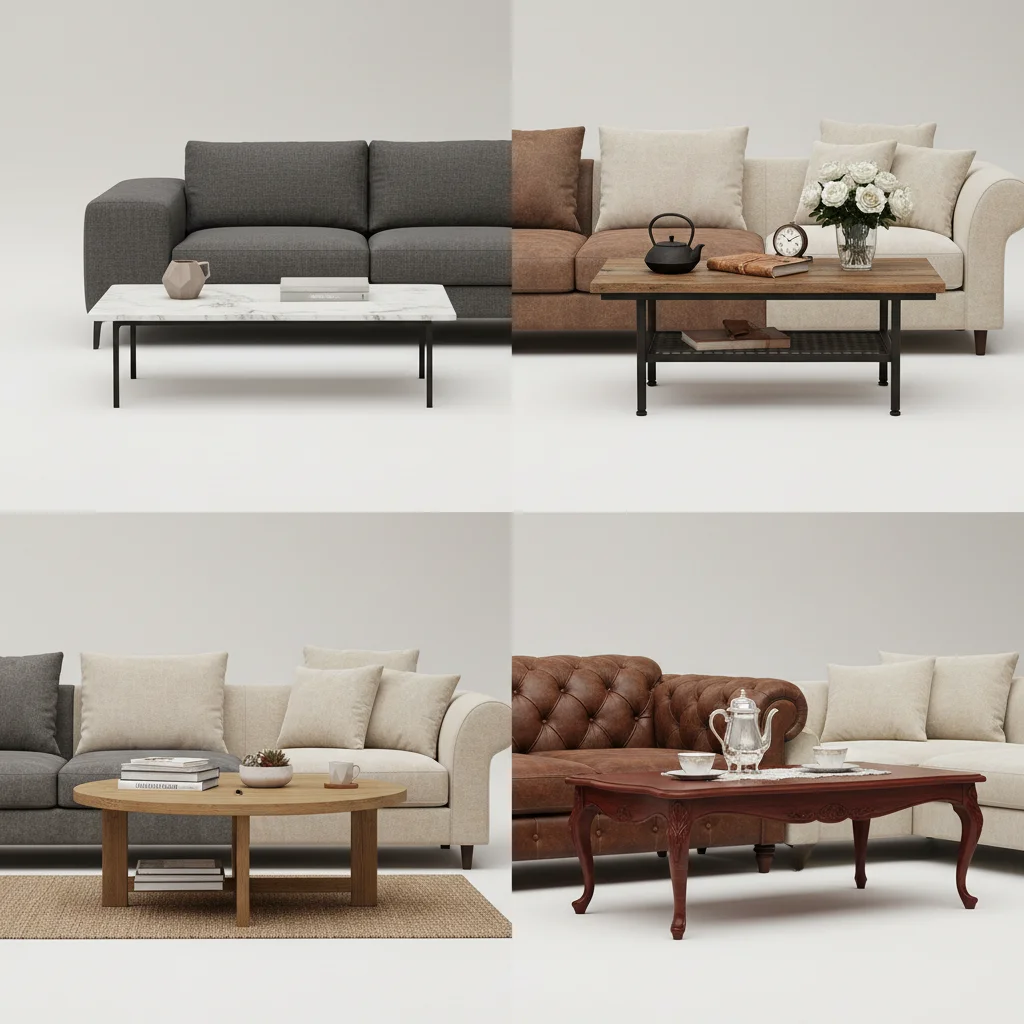
Choosing the correct coffee table height is crucial for both aesthetics and functionality in your living space. The ideal height for a coffee table is generally within 1-2 inches of your sofa’s seat height, whether slightly above or slightly below. This range ensures comfortable access to drinks and snacks, and maintains visual harmony within the room.
Why Coffee Table Height Matters for Comfort and Style
The height of your coffee table directly impacts how comfortable it is to use. A table that’s too high can feel awkward and obstruct views, while one that’s too low might require excessive bending to reach items. Beyond comfort, the right height contributes significantly to the overall balance and flow of your living room. It helps to create a cohesive look, making the space feel more intentional and well-designed.
Consider the primary use of your coffee table. If it’s mainly for decorative items, a slightly higher or lower table might work. However, for daily use like holding remotes, drinks, or even playing board games, aligning its height with your sofa’s seat is paramount.
Measuring Your Sofa for the Perfect Match
Before you start shopping, accurately measure the height of your sofa’s seat from the floor to the top of the cushion. This measurement will be your baseline. Most standard sofas have a seat height between 17 and 19 inches. Therefore, a coffee table in the 16-20 inch range is often a safe bet. Keep in mind that sectional sofas or low-profile modern designs might require a lower coffee table to maintain proportion.
- Measure from the floor to the top of the seat cushion.
- Note any variations in cushion height if they are removable.
- Consider the height of any existing side tables for consistency.
- Factor in the thickness of any rugs under the coffee table.
- Account for the height of anyone frequently using the space.
Adjusting for Different Sofa Styles and Uses
|
Our Picks for the Best Coffee Table in 2026
As an Amazon Associate I earn from qualifying purchases.
|
||
| Num | Product | Action |
|---|---|---|
| 1 | 35.4" Rectangular Coffee Table for Living Room, Modern Industrial Style Coffee Table Center Table with Metal Frame for Small Space, Apartment, Office, Easy Assembly, Brown |

|
| 2 | HOOBRO Coffee Table for Living Room, Oval Small Coffee Table with 2-Tier Open Storage Shelf, Industrial Cocktail Tea Table, Wooden Desktop Center Table, Farmhouse, Home Office, Rustic Brown BF09KF01 |
|
| 3 | Furinno Andrey Coffee Table with Bin Drawer, Amber Pine/Black Small Non-Lift Top |
|
| 4 | Square Nesting Coffee Table Set of 2, 23.6"+19.7" Nesting Tables,Small Square Coffee Table with Fluted,Center Table for Living Room Bedroom Office Balcony Yard (Walnut) |
|
| 5 | Mid Century Modern Solid Wooden Coffee Table,Small UniqueTriangle Wood Center Tables, Sturdy TeaTable Suitable for Living Room Bedroom Balcony Patio Walnut |
|
| 6 | Coffee Table Rectangular Center Table for Living Room Open Space Side Table with Metal Frame, Easy Assembly, Black+ Rustic Brown Wood Coffee Table |
|
| 7 | Smuxee Nesting Coffee Table Set of 2, 23.6" Round Coffee Table Wood Grain Top with Adjustable Non-Slip Feet, Industrial End Table Side Tables for Living Room Bedroom Balcony Yard |
|
| 8 | Furinno Andrey Coffee Table with Bin Drawer, Columbia Walnut/Dark Brown |
|
| 9 | Japanese Low Floor Table Folding Coffee Tables,22.5''x13.5'' Paulownia Wood Tables Tatami Tables Meditation Table Altar with Storage |
|
| 10 | CAJCA Coffee Table for Living Room Mid Century Modern Center Table with Glass Top and Wood, Brown/Walnut |
|
Different sofa styles can influence the optimal coffee table height. For instance, a deep-seated, plush sofa might benefit from a coffee table that’s on the lower end of the recommended range to make reaching items easier. Conversely, a more upright, formal sofa might pair well with a slightly taller coffee table. If you frequently entertain and use your coffee table for serving, a height that allows guests to comfortably reach items without straining is ideal.
Think about the visual weight of your sofa. A large, bulky sofa can sometimes make a very small or low coffee table look disproportionate. Aim for a table that complements the scale of your seating.
Common Mistakes to Avoid When Choosing Height
One common mistake is selecting a coffee table that is significantly taller than your sofa. This can make the room feel cramped and disrupt sightlines. Another error is choosing a table that is too short, forcing you to lean down excessively. Also, don’t forget to consider the overall dimensions of your room. A very large coffee table, even if the correct height, can overwhelm a small space. Always prioritize functionality alongside aesthetics.
Remember that while general guidelines exist, personal preference plays a significant role. If you have specific needs, such as a preference for eating meals at your coffee table, you might lean towards a slightly taller, lift-top option.
Beyond Height: Other Factors for Coffee Table Selection
While height is critical, it’s just one piece of the puzzle. Consider the length and width of the coffee table in relation to your sofa. A good rule of thumb is for the coffee table to be approximately two-thirds the length of your sofa. Also, think about the material and style. A glass top can make a small room feel more open, while a solid wood table adds warmth. The shape of the coffee table (round, square, rectangular) should also complement the layout of your living area and the shape of your seating.
Ultimately, the best coffee table height is one that feels right for you and your living habits, while also contributing to a harmonious and inviting living room environment. Taking the time to measure and consider these factors will lead to a more satisfying purchase.
Get our weekly buyer guide
Practical specs, not advice. Unsubscribe anytime.

I always struggled with my old coffee table feeling too low, making it a pain to grab my drink. After reading about the 1-2 inch rule relative to sofa height, I measured everything and finally bought a new one that fits perfectly. It makes such a difference for comfort and the whole room just looks more put together now. Highly recommend paying attention to those measurements!
I appreciated the tips on how height affects comfort and style. I tried to follow the advice about matching the table height to my sofa, but my specific sofa has really low arms, so it was a bit tricky to find something that didn’t look too tall next to them. The table I got is okay, but it still feels a little off visually. Maybe more examples for different sofa styles would help.
Finally, someone explained why my living room always felt a bit ‘off’! The point about a table being too high obstructing views really resonated with me. My previous coffee table was definitely guilty of that. I replaced it with one that’s exactly the same height as my sofa seat, and the difference is incredible. The space feels so much more open and balanced now.
This was super helpful! I never really thought about how much the coffee table height impacts the overall feel of the living room. My old one was definitely too high and felt awkward. I found a great new table that’s just slightly below my sofa seat, and it’s so much better for movie nights and just generally relaxing. Wish I’d known this sooner.