Choosing the perfect centerpiece for your living room is a pivotal decision, especially when furnishing a family home. This central piece not only defines the room’s aesthetic but also dictates its functionality, safety, and comfort. For many, the choice narrows down to two popular options: the traditional coffee table and the versatile ottoman. Both offer distinct advantages, yet their suitability for a bustling family environment can vary significantly. Understanding their unique characteristics is key to selecting an item that seamlessly integrates with your lifestyle, meets the diverse needs of your family, and transforms your living room into a truly inviting and practical hub.
Understanding the Living Room Centerpiece
The Traditional Coffee Table: Form and Function
The coffee table has long been a staple in living rooms, primarily serving as a dedicated surface for beverages, books, decorative items, and remote controls. Its conventional role emphasizes a stable, flat area designed for convenience and display. Coffee tables are typically crafted from hard materials such as wood, glass, metal, or stone, each offering a distinct aesthetic and level of durability.
- Wood: A timeless choice, wood brings warmth and can complement various styles from rustic to contemporary. However, it can be susceptible to scratches and water rings without proper care.
- Glass: Often chosen for a modern, minimalist look, glass can make a room feel more spacious. Yet, it shows fingerprints easily, can be fragile, and its sharp edges can be a concern for young children.
- Metal: Offering an industrial or contemporary flair, metal tables are generally very durable and easy to clean. They can sometimes feel cold and may dent if mishandled.
- Stone (Marble, Granite): Provides a luxurious and sophisticated appearance. Stone is durable and resistant to heat and scratches, but can be heavy and may require special sealing maintenance.
|
Our Picks for the Best Coffee Table in 2026
As an Amazon Associate I earn from qualifying purchases.
|
||
| Num | Product | Action |
|---|---|---|
| 1 | Mid Century Modern Solid Wooden Coffee Table,Small UniqueTriangle Wood Center Tables, Sturdy TeaTable Suitable for Living Room Bedroom Balcony Patio Walnut |

|
| 2 | Square Nesting Coffee Table Set of 2, 23.6"+19.7" Nesting Tables,Small Square Coffee Table with Fluted,Center Table for Living Room Bedroom Office Balcony Yard (Walnut) |
|
| 3 | CAJCA Coffee Table for Living Room Mid Century Modern Center Table with Glass Top and Wood, Brown/Walnut |
|
| 4 | HOOBRO Coffee Table for Living Room, Oval Small Coffee Table with 2-Tier Open Storage Shelf, Industrial Cocktail Tea Table, Wooden Desktop Center Table, Farmhouse, Home Office, Rustic Brown BF09KF01 |
|
| 5 | Furinno Andrey Coffee Table with Bin Drawer, Amber Pine/Black Small Non-Lift Top |
|
| 6 | Coffee Table Rectangular Center Table for Living Room Open Space Side Table with Metal Frame, Easy Assembly, Black+ Rustic Brown Wood Coffee Table |
|
| 7 | 35.4" Rectangular Coffee Table for Living Room, Modern Industrial Style Coffee Table Center Table with Metal Frame for Small Space, Apartment, Office, Easy Assembly, Brown |
|
| 8 | Furinno Andrey Coffee Table with Bin Drawer, Columbia Walnut/Dark Brown |
|
| 9 | Japanese Low Floor Table Folding Coffee Tables,22.5''x13.5'' Paulownia Wood Tables Tatami Tables Meditation Table Altar with Storage |
|
| 10 | Smuxee Nesting Coffee Table Set of 2, 23.6" Round Coffee Table Wood Grain Top with Adjustable Non-Slip Feet, Industrial End Table Side Tables for Living Room Bedroom Balcony Yard |
|
While coffee tables excel in providing a sturdy surface for various activities like using a laptop or playing board games, their rigid structure and hard materials present potential drawbacks, particularly in homes with active children.
The Versatile Ottoman: Comfort and Adaptability
Originating as a cushioned footrest, the ottoman has evolved into a highly adaptable furniture piece that prioritizes comfort and multi-functionality. Unlike a traditional coffee table, an ottoman combines several roles into one soft-edged design, making it an increasingly popular alternative for family-oriented spaces.
- Storage Ottomans: These are a game-changer for decluttering, offering hidden compartments perfect for stowing away blankets, magazines, or children’s toys.
- Tufted Ottomans: Characterized by their button-tufted upholstery, these add a touch of elegance and texture, enhancing the room’s cozy ambiance.
- Bench Ottomans: Longer and narrower, bench ottomans provide ample extra seating, making them ideal for larger gatherings or at the foot of a bed.
Ottomans come in a wide range of materials, primarily upholstery fabrics or leather. Fabric options, including plush velvet or durable linen, offer endless choices in color and pattern, contributing to a softer, more relaxed look. Leather ottomans provide a sophisticated touch, are generally durable, and easier to wipe clean, making them suitable for households with pets or children. The inherent softness and lack of sharp corners are significant advantages, creating a safer environment for energetic youngsters.
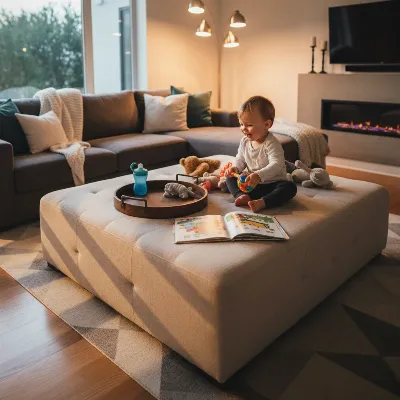 A family-friendly living room featuring a large, soft ottoman serving as both a footrest and a safe play area for children.
Ottoman vs. Coffee Table: A Head-to-Head for Families
When deciding between an ottoman and a coffee table for a family home, several crucial factors come into play, impacting everything from daily safety to long-term practicality.
Safety First: Protecting Your Little Ones
For families with young children, safety is often the paramount concern. This is where ottomans truly shine. Their upholstered, cushioned design eliminates hard surfaces and sharp corners, significantly reducing the risk of bumps, bruises, or more serious injuries during playtime. Children can safely crawl, walk, or even climb around an ottoman without the inherent dangers posed by rigid coffee table edges.
In contrast, traditional coffee tables, with their solid wood, glass, or metal construction, invariably feature hard surfaces and often sharp corners. These can be a constant worry for parents of toddlers and active children who are prone to accidental falls or collisions. While edge protectors can be added, they often detract from the table’s aesthetics and can be easily removed by curious hands.
Functionality and Flexibility: Adapting to Family Life
The ability of a furniture piece to adapt to varied family activities is a major consideration.
- Surface Stability: Coffee tables offer a stable, flat surface, ideal for placing drinks, snacks, laptops, or decorative items without concern for tipping. For delicate items or intricate tasks like drawing, this stability is unmatched. Ottomans, being soft, require the use of a sturdy tray to provide a flat, stable surface for drinks or other objects, otherwise, items are prone to tipping.
- Extra Seating and Footrests: Ottomans excel in offering additional seating, a valuable asset when entertaining guests. They also provide a comfortable spot to rest tired feet after a long day, promoting a more relaxed living environment. Coffee tables, by design, do not offer these comfort-oriented functions.
- Storage Solutions: Many ottomans come with spacious, hidden storage compartments, making them perfect for tidying away children’s toys, extra blankets, or remote controls. This concealed storage helps maintain a clutter-free living space. While some coffee tables include drawers or lower shelves for storage, these are often more visible and may not accommodate bulkier items as easily as a large storage ottoman.
- Movement and Adaptability: Ottomans, especially smaller or modular styles, are often lighter and easier to move around the room to accommodate different group sizes, activities, or simply to create more open space. Coffee tables, particularly those made from heavy materials, are generally more fixed in their placement and less flexible for spontaneous rearrangements.
Durability and Maintenance: Realities of Family Living
The longevity and ease of cleaning are critical in a busy household.
- Durability: Coffee tables made from wood, metal, or stone are inherently durable and resistant to wear and tear over many years. They are less prone to fraying or tearing than upholstered items. However, wood can scratch, glass can break or chip, and metal can dent. Ottomans, particularly those with high-quality upholstery and sturdy frames, can also be very durable, but their fabric surfaces are more susceptible to wear, fading, and potential damage from pets.
- Maintenance: Hard-surfaced coffee tables are generally easier to clean; spills can be quickly wiped away. Wooden tables may require coasters and occasional polishing, while glass needs frequent cleaning to remove fingerprints. Upholstered ottomans, conversely, require more specific cleaning, often involving spot treatments or professional cleaning to keep fabrics fresh and free from stains. Opting for performance fabrics or leather can significantly ease the maintenance burden for ottomans, offering stain and water resistance.
Aesthetic and Style: Creating a Family-Friendly Ambiance
Both furniture types make a significant statement about your home’s style. Coffee tables tend to act as a visual anchor, adding structure and symmetry to a room. Their varied materials and designs can lend themselves to formal, traditional, or sleek modern aesthetics.
Ottomans, with their soft lines and upholstered finishes, introduce a sense of coziness, softness, and a more casual, inviting atmosphere. They can break up an overly structured space and offer an opportunity to experiment with texture, color, and pattern. The choice between the two often boils down to whether you prefer a more structured, defined look or a softer, more relaxed and flexible living space.
Table: Ottoman vs. Coffee Table: Key Differences for Family Living
| Feature | Ottoman | Coffee Table |
|---|---|---|
| Safety | Excellent (soft, cushioned, no sharp edges) | Poor (hard surfaces, potential sharp edges) |
| Functionality | Footrest, extra seating, storage, makeshift table (with tray) | Stable surface for drinks/decor, some storage, display |
| Versatility | High (multi-functional, easy to move) | Moderate (fixed primary function, less movable) |
| Surface | Soft, less stable (requires tray for drinks) | Hard, stable, ideal for items |
| Storage | Often hidden, extensive (e.g., toys, blankets) | Drawers/shelves, can be visible/concealed |
| Maintenance | Upholstery cleaning, stain potential (performance fabrics help) | Easy wipe-down, requires coasters for wood, fingerprints on glass |
| Aesthetics | Adds softness, casual comfort, texture, relaxed vibe | Adds structure, visual anchor, formal/modern appeal |
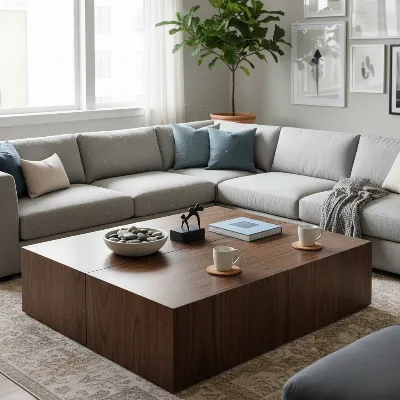 A stylish living room with a modern, rectangular wooden coffee table, showcasing its stable surface for drinks and decor, with visible edges.
Choosing the Best for Your Family: Key Factors
Making the right choice between an ottoman and a coffee table requires a thoughtful assessment of your family’s unique circumstances and priorities.
Your Family’s Lifestyle and Needs
Consider how your family primarily uses the living room. Is it a bustling play area for young children and pets, a frequent hub for entertaining, a quiet space for relaxation, or a combination of all these? If safety for toddlers is a top concern, or if you frequently need extra seating and footrests, an ottoman presents a compelling option. If you prioritize a stable surface for drinks, remote work, or elaborate decorative displays, a coffee table might be more suitable. Your daily activities should heavily influence this decision, ensuring the chosen piece enhances your living experience rather than hinders it.
Space and Layout
The size and layout of your living room also play a critical role. In smaller spaces, or rooms with high traffic flow, the soft edges and movable nature of an ottoman can be advantageous, preventing bumps and offering flexible arrangements. Storage ottomans are particularly beneficial for maximizing space efficiency. For larger, more open living rooms, a substantial coffee table can effectively anchor the seating area and provide a clear focal point. Conversely, an oversized ottoman can also make a statement, inviting a more relaxed and communal feel.
Budget and Long-Term Value
Both ottomans and coffee tables are available across a wide spectrum of price points, from budget-friendly options to high-end luxury pieces. When considering your budget, think beyond the initial purchase price. Factor in the long-term durability and maintenance requirements. A high-quality coffee table made from solid wood or metal might last for decades with proper care, potentially making it a wise long-term investment. Similarly, an ottoman with durable upholstery or performance fabric can withstand years of family use. Consider whether you prefer a piece that might need reupholstering over time (ottoman) or one that might show scratches or dings (wood coffee table).
Conclusion
The decision between an ottoman and a coffee table for your family living space ultimately hinges on a thoughtful balance of safety, functionality, and aesthetic preference. Ottomans offer unparalleled safety for children, combined with remarkable versatility through extra seating, footrest comfort, and often hidden storage—ideal for dynamic family life. Coffee tables, on the other hand, provide a stable, traditional surface perfect for entertaining, display, and more structured activities.
By carefully evaluating your family’s unique lifestyle, considering the size and demands of your living area, and weighing your budget against long-term value, you can confidently select the centerpiece that not only enhances your home’s design but also fosters a comfortable, practical, and safe environment for everyone. Which aspect of your living room’s daily life will guide your ultimate choice?
Frequently Asked Questions
Is an ottoman safer than a coffee table for toddlers?
Yes, ottomans are generally much safer for toddlers due to their soft, upholstered surfaces and lack of sharp corners or hard edges. This significantly reduces the risk of injury during falls or playtime in the living room, making them a preferred choice for families with young children.
Can an ottoman truly replace a coffee table in a busy household?
An ottoman can effectively replace a coffee table in many busy households, especially when paired with a sturdy tray for drinks and snacks. Its multi-functional nature provides extra seating, a comfortable footrest, and often hidden storage, making it highly adaptable to a family’s evolving needs.
What materials are best for a family-friendly coffee table?
For a family-friendly coffee table, durable materials like solid wood or metal are generally recommended due to their resilience. If choosing wood, opt for hardwoods like oak or walnut. Glass or sharp-edged tables are often less ideal due to safety concerns for children.
How do I keep an upholstered ottoman clean with kids and pets?
To keep an upholstered ottoman clean with kids and pets, consider choosing performance fabrics or leather, which are more resistant to stains and easier to wipe clean. Regular vacuuming, prompt spot cleaning of spills, and occasional professional cleaning are also recommended to maintain its appearance.
Do ottomans typically offer more storage than coffee tables?
Many ottomans, particularly larger designs, are specifically built with spacious internal storage compartments, often providing more extensive and concealed storage capacity for items like toys, blankets, or magazines compared to the typical drawers or shelves found in coffee tables.
