Few things are as instantly irritating as a wobbly coffee table. That subtle rock, the constant concern about spills, or the distraction it creates during a quiet moment – it’s a disruption that demands attention. As the Admin for ReviewLHC.com, with over a decade immersed in furniture, especially coffee tables, I’ve encountered countless wobbly culprits. The good news is that most unstable tables can be swiftly brought back to solid ground with simple at-home solutions, often requiring no special tools. This guide will help you diagnose the issue and apply the right fix to restore peace to your living space.
Common Causes of a Wobbly Coffee Table
Understanding why your coffee table wobbles is the first step toward a lasting solution. While the symptom is clear, the root cause can vary.
- Uneven Flooring: This is perhaps the most frequent, yet often overlooked, culprit. Many homes, especially older ones, have floors that aren’t perfectly level. A slight dip or rise can cause one or more table legs to lose contact.
- Loose Hardware: Over time, the screws, bolts, and brackets that connect your coffee table’s legs to its frame can loosen due to daily use, moving the table, or natural expansion and contraction of wood. This results in joints that no longer hold firm.
- Uneven Leg Length: Legs can become uneven due to manufacturing inconsistencies, damage, or wear and tear that gradually shortens one leg more than the others. Even a small difference of an eighth of an inch can lead to a noticeable wobble.
- Worn or Damaged Leg Components: The feet of your table legs might have worn-down pads, or the legs themselves could have developed splits or cracks, compromising their structural integrity.
Quick Fixes for Immediate Stability
Sometimes, you need a fast solution to stop the wobble right now. These methods require minimal effort and often no special tools.
The Quarter-Turn Method
|
Our Picks for the Best Coffee Table in 2026
As an Amazon Associate I earn from qualifying purchases.
|
||
| Num | Product | Action |
|---|---|---|
| 1 | CAJCA Coffee Table for Living Room Mid Century Modern Center Table with Glass Top and Wood, Brown/Walnut |

|
| 2 | 35.4" Rectangular Coffee Table for Living Room, Modern Industrial Style Coffee Table Center Table with Metal Frame for Small Space, Apartment, Office, Easy Assembly, Brown |
|
| 3 | HOOBRO Coffee Table for Living Room, Oval Small Coffee Table with 2-Tier Open Storage Shelf, Industrial Cocktail Tea Table, Wooden Desktop Center Table, Farmhouse, Home Office, Rustic Brown BF09KF01 |
|
| 4 | Coffee Table Rectangular Center Table for Living Room Open Space Side Table with Metal Frame, Easy Assembly, Black+ Rustic Brown Wood Coffee Table |
|
| 5 | Furinno Andrey Coffee Table with Bin Drawer, Amber Pine/Black Small Non-Lift Top |
|
| 6 | Furinno Andrey Coffee Table with Bin Drawer, Columbia Walnut/Dark Brown |
|
| 7 | Smuxee Nesting Coffee Table Set of 2, 23.6" Round Coffee Table Wood Grain Top with Adjustable Non-Slip Feet, Industrial End Table Side Tables for Living Room Bedroom Balcony Yard |
|
| 8 | Square Nesting Coffee Table Set of 2, 23.6"+19.7" Nesting Tables,Small Square Coffee Table with Fluted,Center Table for Living Room Bedroom Office Balcony Yard (Walnut) |
|
| 9 | Japanese Low Floor Table Folding Coffee Tables,22.5''x13.5'' Paulownia Wood Tables Tatami Tables Meditation Table Altar with Storage |
|
| 10 | Mid Century Modern Solid Wooden Coffee Table,Small UniqueTriangle Wood Center Tables, Sturdy TeaTable Suitable for Living Room Bedroom Balcony Patio Walnut |
|
Believe it or not, sometimes simply rotating your table can solve the wobble, especially on uneven floors. This is based on a mathematical principle that a four-legged table can almost always find a stable position on an uneven surface within a 90-degree rotation. Gently turn your coffee table a quarter of a turn (90 degrees) and test its stability. Repeat if necessary until you find a sweet spot where all four legs make firm contact with the floor. This method is best for minor floor unevenness and provides an instant, no-cost solution.
Improvised Shims
For a quick and effective temporary fix, resourceful shims can work wonders. If one leg is clearly shorter or lifts off the floor, slide a small, rigid item underneath it. Common household items like folded pieces of paper, business cards, matchbooks, or even a stack of coasters can bridge the gap. For a slightly more aesthetically pleasing and stable makeshift shim, you can cut a thin slice from an old wine cork and place it under the offending leg. You can even secure a cork slice with a dab of hot glue for a semi-permanent solution that blends in more discreetly.
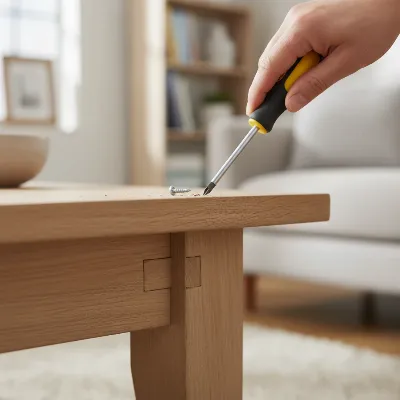 Hand tightening a loose screw on a wooden coffee table leg to fix a wobble.
Adhesive Pads
Self-adhesive furniture pads, made of felt, rubber, or cork, are excellent for addressing minor height discrepancies and also serve a dual purpose of protecting your floors. These are available in various thicknesses and can be stuck directly to the bottom of the shorter leg. They not only level the table but also provide friction, preventing the table from sliding and safeguarding your flooring from scratches. Choose a pad thickness that closely matches the gap to avoid over-correcting and creating a new wobble.
Tools and Materials for More Permanent Solutions
For lasting stability, you might need a few basic tools and materials you likely already have or can easily acquire.
- Screwdriver set (Phillips and flathead): For tightening screws.
- Wrench set (Allen keys/adjustable wrench): For tightening bolts.
- Wood glue: Essential for reinforcing loose joints or stripped screw holes.
- Clamps: To hold glued joints securely while they dry.
- Measuring tape and level: For accurate diagnosis and leveling.
- Utility knife: For cutting shims or trimming excess material.
- Optional: Hot glue gun, sandpaper, drill, adjustable leg levelers.
Step-by-Step Solutions for Lasting Stability
Once you’ve identified the core problem, you can implement a more robust repair.
Tightening Loose Hardware
This is often the simplest and most effective permanent fix.
- Inspect: Turn your coffee table upside down or on its side. Carefully examine all screws, bolts, and brackets connecting the legs to the tabletop or frame. Wiggle each leg gently by hand to pinpoint loose connections.
- Tighten: Use the appropriate screwdriver or wrench to tighten all visible hardware until snug. Be careful not to overtighten, especially with wood, as this can strip the threads.
- Address Stripped Holes: If a screw spins endlessly without tightening, the wood threads in the hole are stripped. Remove the screw, apply a few drops of wood glue into the hole (you can also insert a few wooden toothpicks with glue for extra fill), then immediately reinsert and tighten the screw. Let the glue cure for 24 hours before using the table. The glue creates new material for the screw to grip, providing a solid repair.
Reinforcing Weak Joints
Over time, the glue in traditional furniture joints can degrade, leading to weakness and wobbling.
- Locate Weakness: Identify any joints where legs meet the apron or where the frame feels loose.
- Apply Wood Glue: Carefully inject wood glue into any visible cracks or gaps in the joint. If a leg can be slightly pulled away, apply glue there.
- Clamp: Use furniture clamps to hold the joint tightly together while the glue dries, ideally for at least 24 hours. Wipe away any excess glue immediately with a damp cloth. For severe weakness, you might consider adding L-brackets to the inner corners of the joints for extra reinforcement, screwing them into both the leg and the frame.
Installing Adjustable Leg Levelers
For truly uneven floors or persistent wobbles, adjustable leg levelers are a long-term, elegant solution.
- Purchase Levelers: These threaded feet can be screwed into the bottom of each table leg. They allow you to micro-adjust each leg’s height by twisting it in or out.
- Install: Depending on the type, installation typically involves drilling a pilot hole into the center of the bottom of each leg, then screwing in the leveler.
- Adjust: Place the table in its desired spot and use a spirit level on the tabletop. Adjust each leveler by twisting until the table is perfectly stable and level. This offers precise control and can compensate for significant floor variations.
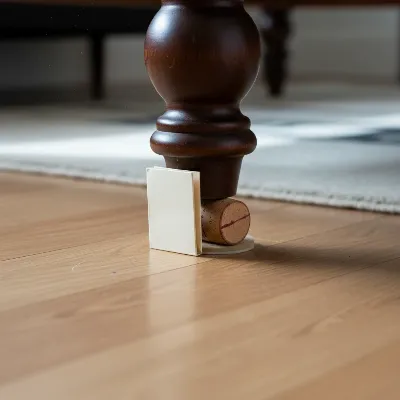 Assorted makeshift shims like folded paper, cork, and a felt pad under a wobbly coffee table leg.
Preventing Future Wobbles
A little proactive care can save you from future frustrations.
- Regular Maintenance: Make it a habit to periodically check and tighten all screws and bolts on your coffee table, perhaps once or twice a year. This simple step can prevent most wobbles from ever developing.
- Use Floor Protectors: Apply felt or rubber pads to the bottom of all table legs. These reduce friction when moving the table, prevent floor scratches, and absorb minor impact, reducing stress on the joints.
- Mindful Placement: Avoid dragging your coffee table across the floor, especially over uneven surfaces or thresholds. Lift and carry it when moving to minimize strain on the legs and joints.
Table: Comparing Quick Fixes and Permanent Solutions
| Method | Speed | Cost | Durability | Skill Level | Tools Needed |
|---|---|---|---|---|---|
| Quarter-Turn | Very Fast | Free | Low | Very Easy | None |
| Improvised Shims | Fast | Free/Low | Low | Easy | None / Utility knife (optional) |
| Adhesive Pads | Fast | Low | Medium | Easy | None |
| Tighten Hardware | Medium | Low | Medium | Easy | Screwdriver, Wrench |
| Wood Glue Joints | Medium | Low | High | Medium | Wood glue, Clamps |
| Adjustable Levelers | Slow | Medium | High | Medium | Drill, Screwdriver |
Expert Insights
“Many homeowners overlook the simple act of regular furniture maintenance. A quick check and tightening of hardware once a year can prevent most wobbles before they even become an annoyance.” – Johnathan Reed, Master Furniture Craftsman
Conclusion
A wobbly coffee table, while annoying, is almost always a solvable problem. Whether the culprit is an uneven floor, loose hardware, or minor leg discrepancies, there’s a fix available, from quick, no-tool tricks to more permanent, lasting repairs. By taking a few moments to diagnose the issue and apply the appropriate solution, you can restore your coffee table to a stable, reliable centerpiece in your home. Don’t let a dancing coffee table disrupt your peace any longer.
Câu Hỏi Thường Gặp
How do I identify which leg is causing the wobble?
Place the table on a flat, even surface (if possible). Press down gently on diagonally opposite corners. The corner that lifts or causes rocking indicates the problem leg is usually the one on the opposite diagonal or one of the two under the lifting corner. You can also slide thin objects like paper under each leg until the table stabilizes, pinpointing the short leg.
Can a wobbly coffee table damage my floor?
Yes, a continuously rocking coffee table can cause wear and tear on your flooring. The constant friction and pressure can lead to scratches, dents, or uneven wear patterns, especially on hardwood, laminate, or delicate tile surfaces. Addressing the wobble quickly helps protect your floors.
What if my coffee table wobbles due to stripped screw holes?
If a screw hole is stripped, remove the screw completely. Fill the hole with wood glue, and for extra stability, you can insert a few wooden toothpicks or matchsticks (with the heads removed) along with the glue. Allow the glue to become tacky, then reinsert and tighten the screw. Let it cure fully for 24 hours to create a strong new bond.
Are adjustable leg levelers suitable for all types of coffee tables?
Adjustable leg levelers are quite versatile and can be installed on most coffee tables with solid wood or metal legs. They are generally not suitable for hollow legs or legs made of very thin, brittle materials that cannot securely hold a screw or threaded insert.
How often should I check my coffee table for wobbles?
It’s a good practice to periodically check your coffee table and other frequently used furniture for wobbles. A quick inspection and tightening of hardware every 6 to 12 months can prevent minor issues from escalating and help maintain the longevity and stability of your furniture.
